
Demo Event 2
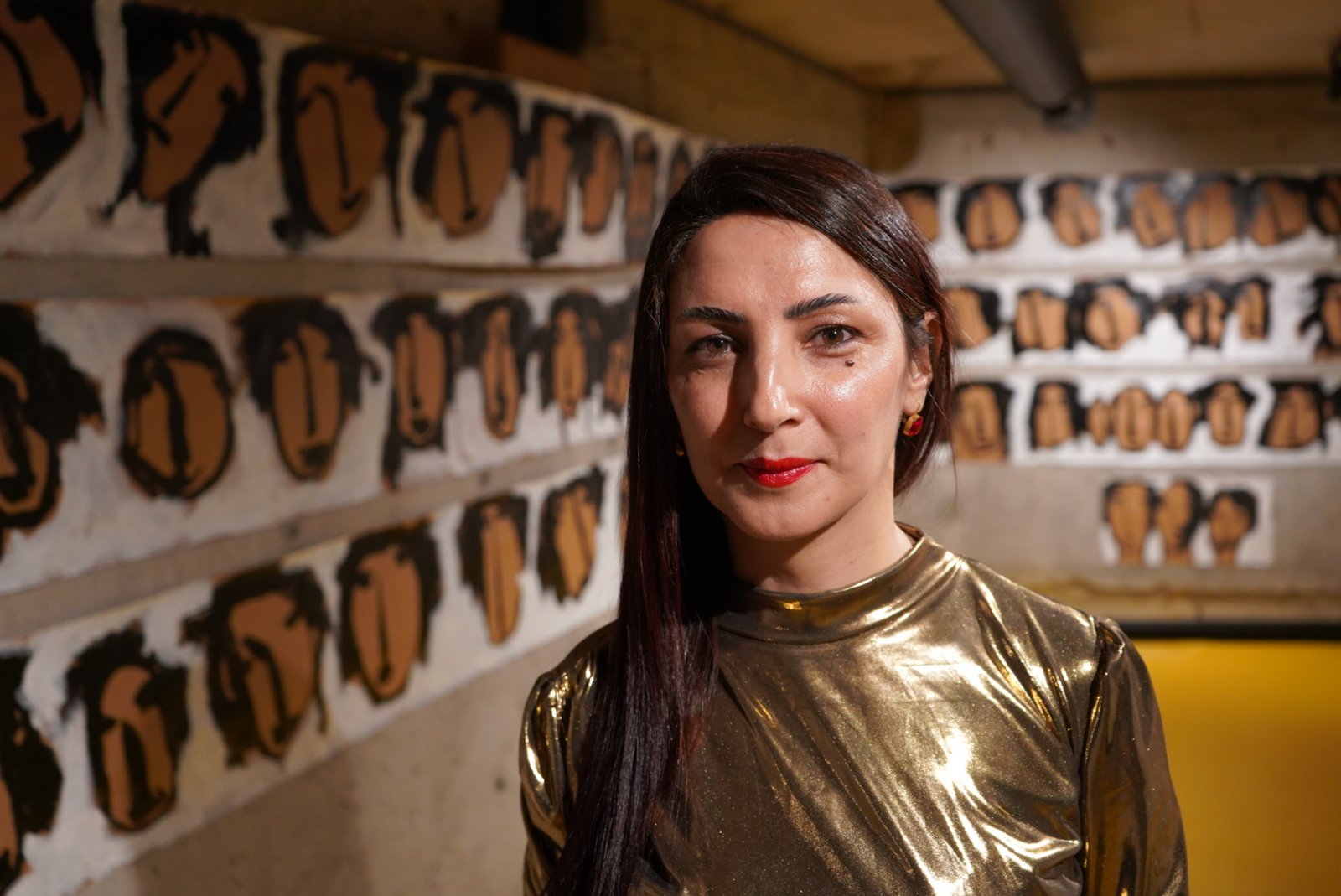
Bîra Rû began in Sulaymaniyah and continues in Diyarbekir. What started as a series of drawings gradually became a shared practice, where faces emerge through encounters, gestures, and repetition. Working across several-meter-long kraft papers, Sakar Sleman brings these faces together on a surface that is continuous yet fragmented—unrolling as a single plane while resisting any sense of wholeness.
The face is neither singular nor fixed. It moves across time, carrying traces of different moments, different people. Each face has a distinct presence, yet none stands alone—not portraits in any traditional sense, but brief expressions, small differences, accumulated traces. As they gather, patterns begin to appear, then dissolve. They resist forming a single image.
As the work moves between cities, it takes on new layers. The faces are not simply transported from one place to another; they are reworked, reconsidered, placed in relation to new contexts and different presences. In this sense, the project remains open—less a fixed body of work than a practice that continues to unfold.
From the oldest to the youngest, each face carries a different tone. What holds them together is not a unified narrative but a set of relations—a space in which memory is not stored but kept in motion.
Artist’s Statement
The idea of The Memory of Faces came from my question: what did the faces of my ancestors, as Kurdish people, look like? I started searching for old information and photographs to see what Kurdish men’s and women’s faces looked like, what they had left for us, and what I have personally left behind in my own face.
Then, I discussed with Gül Hür how, as an artist, I could draw faces together with artists and people in Diyarbakır, an ancient Kurdish city. In this way, we might create drawings that become a memory of our faces.
I created this work on kraft paper from the old Sulaymaniyah Cigarette Factory, which is now a cultural center. The paper is 200 meters long and 35 cm wide, consisting of four pieces with five independent sections, all filled with faces in black and white, the original and oldest two main colors.